Is Hell Real?
Almost no one asks this question idly. It usually arrives in the dark — after a funeral, after a betrayal, after a fear you can’t shake about someone you love or about yourself. So let’s be honest from the first line: no one can prove hell is real, and no one can prove it isn’t. What we can do is something more useful than a verdict. We can look at how humanity has answered this question — and notice that the idea of a reckoning after death, some place or state where how you lived is finally weighed, appears nearly everywhere people have ever lived. That pattern is worth sitting with before you decide what it means.
Why does nearly every culture imagine a place of reckoning?
Strip away the imagery and a single intuition keeps surfacing: that a life is not simply over when it ends — that it is seen, weighed, accounted for. The Egyptians pictured the heart laid on a scale against a feather. The Greeks sent the unjust to Tartarus, a pit below even the gray underworld of Hades. Zoroastrians imagined a bridge the soul must cross that narrows under the weight of a cruel life. Christians and Muslims describe a judgment with consequences. These cultures shared no language and, often, no contact. They arrived independently at the same shape: somewhere, somehow, the moral weight of a life comes due.
That convergence is not proof of hell. But it is real data about something deep and stubborn in human experience — the refusal to believe that cruelty and kindness simply vanish, equal, into nothing.
What does the Bible actually say about hell?
Less, and more strangely, than most people assume. The English word “hell” translates several different things in scripture — Sheol, the shadowy grave of the Hebrew Bible; Gehenna, a burning valley outside Jerusalem that Jesus used as an image; Hades, the Greek underworld. They are not one tidy place.
What stays constant is the theme of accountability. Jesus speaks of a final separation, “everlasting fire” (Matthew 25:41), and Revelation pictures a “lake of fire” (Revelation 20:15). Yet Christians have read these images in radically different ways for two thousand years — as a literal place of torment, as eternal separation from God, as a self-chosen turning-away, even as something that finally ends. The conviction underneath the disagreement is simpler than any of the pictures: how you lived is not erased by death. (Read what scripture actually says →)
Is Islam’s Jahannam the same idea?
It rhymes, but it carries its own emphasis. The Quran describes Jahannam vividly — fire, and a real consequence for cruelty and denial — but the same passages return again and again to mercy. God is named “the Most Merciful” far more often than he is named in judgment, and many Muslim scholars have held that Jahannam, for most, is not permanent but purifying — a passage, not a final address. “My mercy encompasses all things,” the Quran says (Quran 7:156). The weighing is real; so is the door left open.
This is where reading traditions side by side earns its keep. The popular image of hell as a single, eternal furnace turns out to be one reading among several — even within the traditions usually cited to support it.
Why do Hindu and Buddhist hells have an exit?
Here the picture shifts in a way that surprises most Western readers. In Hindu and Buddhist cosmology, the hell-realms — Naraka — are real, often described in harrowing detail, but they are almost never forever. They are a stage. A soul works through the consequences of its actions and then moves on, reborn. Hell here is less a sentence than a correction within the long arc of karma — temporary, exhausting itself, opening back onto the wheel of rebirth.
The Tibetan tradition maps these states in extraordinary detail, treating them less as geography than as conditions the mind can fall into. Set beside the Christian and Islamic versions, the contrast is illuminating: nearly everyone imagines a reckoning, but they disagree profoundly on whether it is the end of the story or a hard chapter inside it.
What about the Greek underworld?
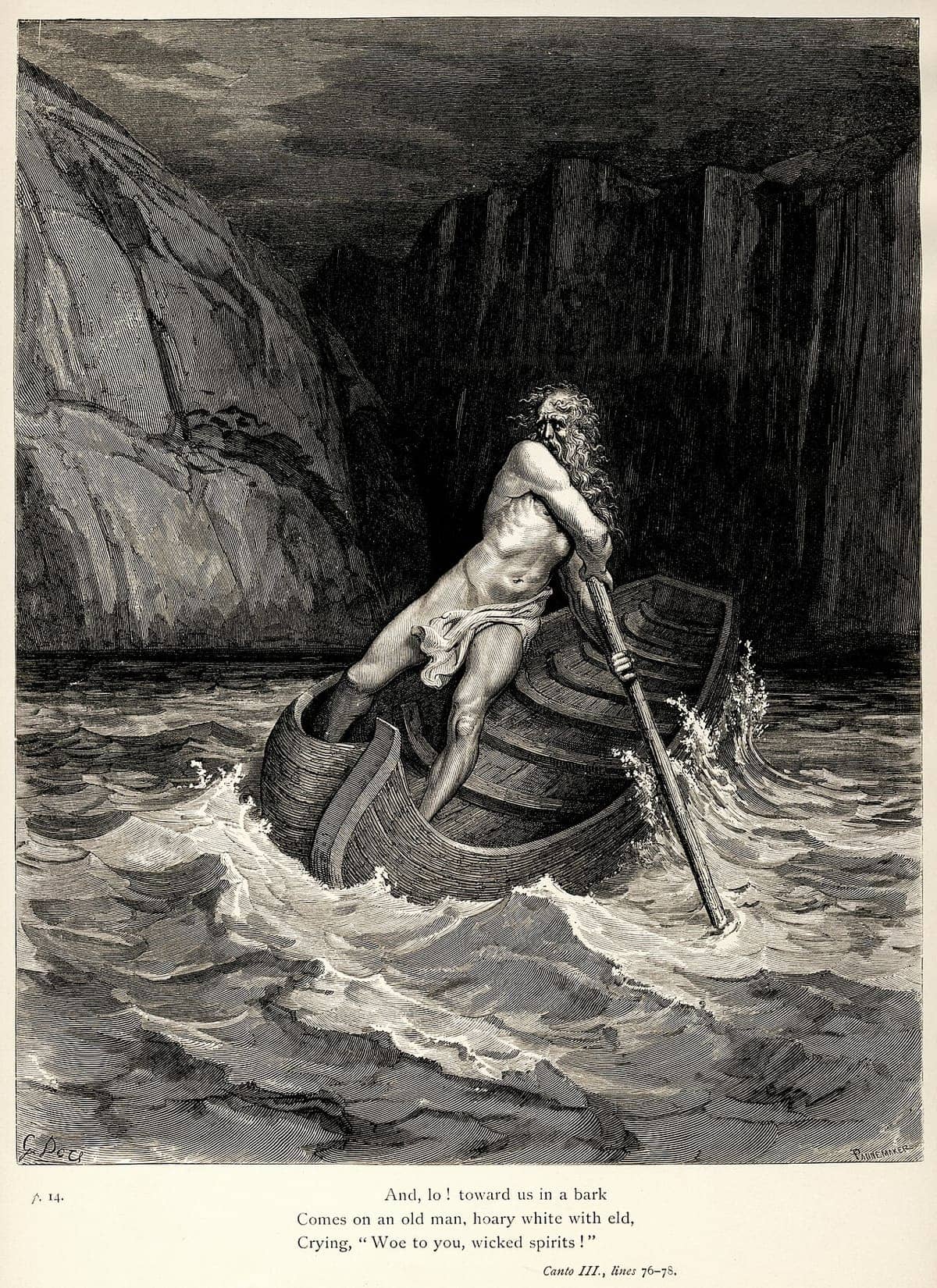
The Greeks drew the map early and starkly. Most of the dead went to Hades — not a place of punishment so much as a dim, diminished half-existence. But for the truly wicked there was Tartarus, the abyss, where figures like Tantalus and Sisyphus paid for their crimes in endless, pointed futility; and for the just, the Elysian Fields. The Greeks were among the first to split the afterlife by desert — to insist the murderer and the righteous could not arrive at the same destination. That moral sorting is the seed from which most later hells grew.
Do near-death experiences ever describe hell?
This is the part most people don’t expect. The overwhelming majority of near-death accounts are not frightening at all — they describe a loving light, a profound peace, a panoramic review of one’s life felt from the inside of everyone it touched, and almost universally the loss of any fear of death. That pattern is the load-bearing fact of the entire literature, and it points the opposite direction from terror. (Watch a firsthand account of the loving light → (NDE in a Timeless Realm))
But there is a rarer, honest minority that has to be named. A small fraction of experiencers report something distressing — darkness, isolation, a void, a sense of falling or of being unseen. Researchers who collect these accounts, including those at the International Association for Near-Death Studies, note something important about them: many of these experiences resolved — the person who called out, or let go, often described the darkness giving way to the same light everyone else found. Even the frightening accounts tend not to read like a sentence. They read like a passage.
What no near-death account, comforting or distressing, has ever brought back is a fixed map of an eternal hell. The distressing ones are real, and rare, and most often temporary. That is the honest shape of the evidence — and like everything here, it is pattern, not proof. The reader decides what it weighs.
So — is hell real?
Here is the most honest answer available: no one knows. But notice what the traditions, read together, actually establish. Nearly every culture imagined a reckoning — which tells us something true about the human conscience, even if it tells us nothing certain about the geography of the next world. The fiercest images of eternal torment turn out to be one reading among many, often softened toward mercy or made temporary even within their own traditions. And the firsthand accounts from the threshold point, overwhelmingly, toward light rather than fire — with a rare, honest minority of darkness that usually doesn’t last.
The pattern is real, and it is strange: humanity cannot stop believing that how we live matters past our own death. What that finally means — warning, metaphor, or mercy — is the one question no tradition has proven, and the one no one else can answer for you.
Existential Atlas lays out these perspectives with the original sources side by side. What happens when you die? → · or explore the question yourself.
Frequently asked questions
Is hell eternal, or does it end? Traditions disagree sharply. Some Christian readings hold it eternal; many Muslim scholars treat Jahannam as purifying rather than permanent; and Hindu and Buddhist hell-realms are explicitly temporary stages within rebirth. The “eternal furnace” is one image among several. Rebirth and reincarnation →
Does the Bible clearly describe hell? Less clearly than most assume. The word translates several different concepts — Sheol, Gehenna, Hades — and Christians have read the imagery as literal fire, as separation from God, or as a self-chosen turning-away for two thousand years. What the Bible actually says →
Do near-death experiences prove hell exists? No. The overwhelming majority describe a loving light and peace, not terror; a rare minority report distressing, dark experiences, but these are often temporary and frequently resolve into the same light. No account brings back a fixed map of eternal hell. Near-death experiences →
Why do so many religions believe in judgment after death? Because the intuition that a life is finally weighed appears nearly everywhere, in cultures with no contact — from the Egyptian scale of the heart to the Greek underworld to Christian and Islamic judgment. It’s one of humanity’s most consistent convictions. What happens when you die? →