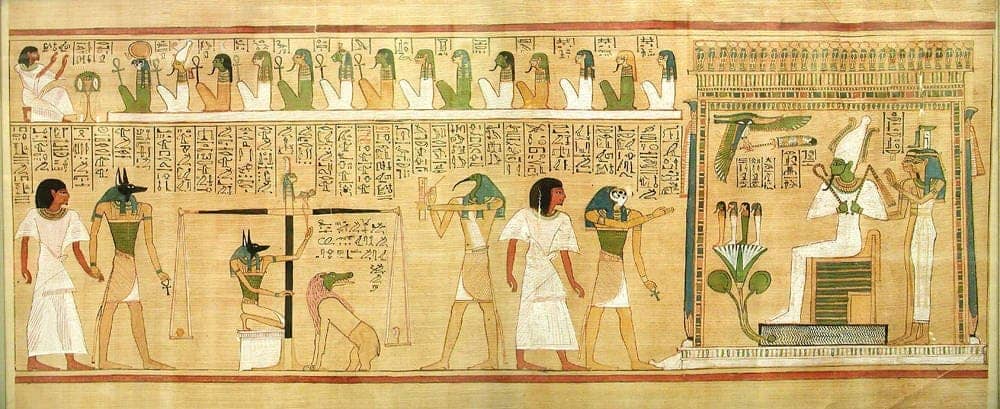
Is There Karma?
The word has traveled a long way from home, and lost most of itself on the trip. In ordinary English, “karma” has come to mean a kind of cosmic scorekeeping — you did something bad, the universe will get you back, what goes around comes around. That version is almost the opposite of what the traditions that built the idea actually meant. So before asking whether karma is real, it is worth asking what the word even points at — because the answer the traditions give is stranger, quieter, and harder to dismiss than the bumper-sticker version most of us inherited.
What does karma actually mean?
Start with the literal sense. Karma is Sanskrit for action — nothing more loaded than that. It is not a verdict handed down by a judge. It is not punishment dispatched from above. In its oldest meaning it names a simple observation: actions have consequences, and those consequences shape what comes next. The moral universe runs on cause and effect, the same way the physical one does. You are, in some real sense, the accumulating result of what you have done.
That reframing matters, because it removes the figure most Westerners smuggle in: the cosmic enforcer keeping a tally and settling scores. In the Indian traditions there is usually no such accountant. Consequence is not assigned to the act from outside. It is built into the act — the way a thrown stone carries its arc, not because anyone is aiming it after it leaves the hand. Karma is less a courtroom than a law of motion for the inner life.
Why isn’t karma the same as cosmic punishment?
This is where the Western moral-causation intuition and the original idea quietly part ways. We tend to imagine justice as something done to us: a sentence, a reward, an external balancing of the books. Karma, in its source traditions, is something that happens as us — the shape our own actions leave on who we are becoming.
The Bhagavad Gita makes the point by attacking the part of action we cling to hardest: the result. Its famous counsel is to act without grasping at the fruit of the act — “You have a right to your actions, but never to the fruits of your actions” is the sense of its best-known teaching (Bhagavad Gita 2:47, Library →). The teaching is not fatalism. It is a precise diagnosis of how we bind ourselves: it is the craving for and clinging to outcomes that ties us to the wheel, not action itself. Do the right thing because it is right; release your grip on what you get for it. That is a moral psychology, not a threat.
Buddhism sharpens the same point and moves it inward. Here karma is fundamentally about intention — the quality of the will behind the act. The Dhammapada opens by putting mind first: what we are arises from what we have thought; speak or act from a corrupted mind, and suffering follows as the wheel follows the ox that draws it; speak or act from a clear one, and well-being follows like a shadow that never leaves (Dhammapada 1:1–2, Library →). Notice what is absent: a god, a sentence, an enforcer. The consequence is not delivered. It unfolds, lawfully, from the state of mind that produced the act. Suffering is not the bill for wrongdoing. It is wrongdoing’s natural extension.
How do the three traditions disagree about it?
Karma is one of the few ideas Hinduism, Buddhism, and Jainism genuinely share — and watching where they diverge tells you what each thinks a human being most deeply is.
For the Hindu traditions, karma attaches to an enduring self, the atman, and carries it forward across lifetimes — the residue of action shaping the circumstances of the next birth. There is real continuity: someone is accumulating, someone is liberated. Buddhism keeps the law of consequence and removes the self it attaches to. With anatta — no fixed self — there is no soul-substance collecting karmic merit. What continues is a stream of causes and conditions, not an owner of them. The consequence carries forward; the “you” who earned it was never a solid thing to begin with.
Jainism took the idea more literally than anyone, and built an entire cosmos out of it. For the Jains, karma is almost physical — a fine substance that actual deeds cause to cling to the soul, weighing it down, clouding it, keeping it bound. The whole spiritual path becomes a labor of burning that accumulated weight off through non-harm and self-discipline, until the soul, finally unburdened, rises free. Three traditions, one shared law, three different answers to what exactly the karma sticks to — a self, a stream, or a soul made heavy by its own history.
Where does the near-death pattern fit in?
Here is the part that is hard to set down once you have noticed it. People who clinically died and came back rarely return carrying a doctrine. They return carrying a pattern — and one piece of that pattern looks remarkably like karma seen from the inside.
Across faiths and across no faith, near-death experiencers describe a few things with striking consistency: awareness continuing after the body stopped, often clearer than waking life; a light experienced as conscious and loving; and a panoramic review of their life — not watched from the outside, but re-lived from the receiving end. They report feeling the effect of each of their actions as the person on the other side of it felt it: the kindness and the cruelty alike, met again from within those they had touched. (Watch a firsthand account of the life review → (Ishtar Howell))
Look at what that is. No external judge. No sentence handed down. The accounting is built into the act itself, experienced rather than assigned — consequence unfolding from inside the deed, exactly as the Indian traditions described it millennia earlier. The Hindu residue of action, the Buddhist law of intention bearing its own fruit, the Jain weight that the soul carries because of what it did — and then thousands of ordinary modern people, most of whom had read none of that, describing a self-administered reckoning with the same fingerprint. Independent witnesses converging on one structure. Existential Atlas won’t tell you what that proves. It will only point out how loud the convergence is.
What we actually know
No one has proven that actions echo beyond their visible consequences, and no one has disproven it. What exists is a pattern of unusual persistence. A single idea — that consequence is woven into action rather than dispensed from above — arose with remarkable precision across three Indian traditions that disagreed about almost everything else. And then the near-death accounts, uncoached, kept describing a life review that runs on exactly that logic: not punishment, but action met again from the inside.
The popular version — the universe punishing you, what goes around coming around — turns out to be the shallowest reading available. The traditions were pointing at something quieter and more demanding: that you are continuously becoming the sum of what you do, and that the consequence may not be something done to you at all, but something you have been making of yourself the whole time. The brain may yet account for part of the life review; that explanation is real, and it is not the whole of it, and it does not get the last word. The pattern is real. The pattern is strong. What it means is the one thing no tradition can hand you — and that question is yours.
Existential Atlas lays these perspectives out with the original sources side by side. Why do we suffer? → · or explore the question yourself.
Frequently asked questions
Is karma the same as cosmic punishment? No — and the traditions that built the idea would say that reading misses it entirely. Karma means action: consequence woven into the deed itself, not a sentence handed down by an external judge. The shift from “the universe punishes you” to “you become the sum of what you do” is the whole point. Why do we suffer? →
Do Hinduism and Buddhism mean the same thing by karma? They share the law and disagree about who it acts on. Hinduism attaches karma to an enduring self that carries it across lifetimes; Buddhism keeps the law of consequence but denies any fixed self, so what continues is a stream of causes, not a soul collecting merit. Rebirth and reincarnation →
Does the near-death life review prove karma is real? It doesn’t prove anything — but it is striking. Near-death experiencers describe re-living their actions from the perspective of those they affected, with no external judge and the accounting built into the act itself. That mirrors what the Indian traditions meant by karma with unusual precision. Near-death experiences →
If there’s no cosmic judge, why does karma matter? Because in its source traditions the consequence isn’t assigned to you from outside — it is you, the shape your own actions leave on who you are becoming. That makes it less a threat than a description of how a life accumulates. Is life fair? →