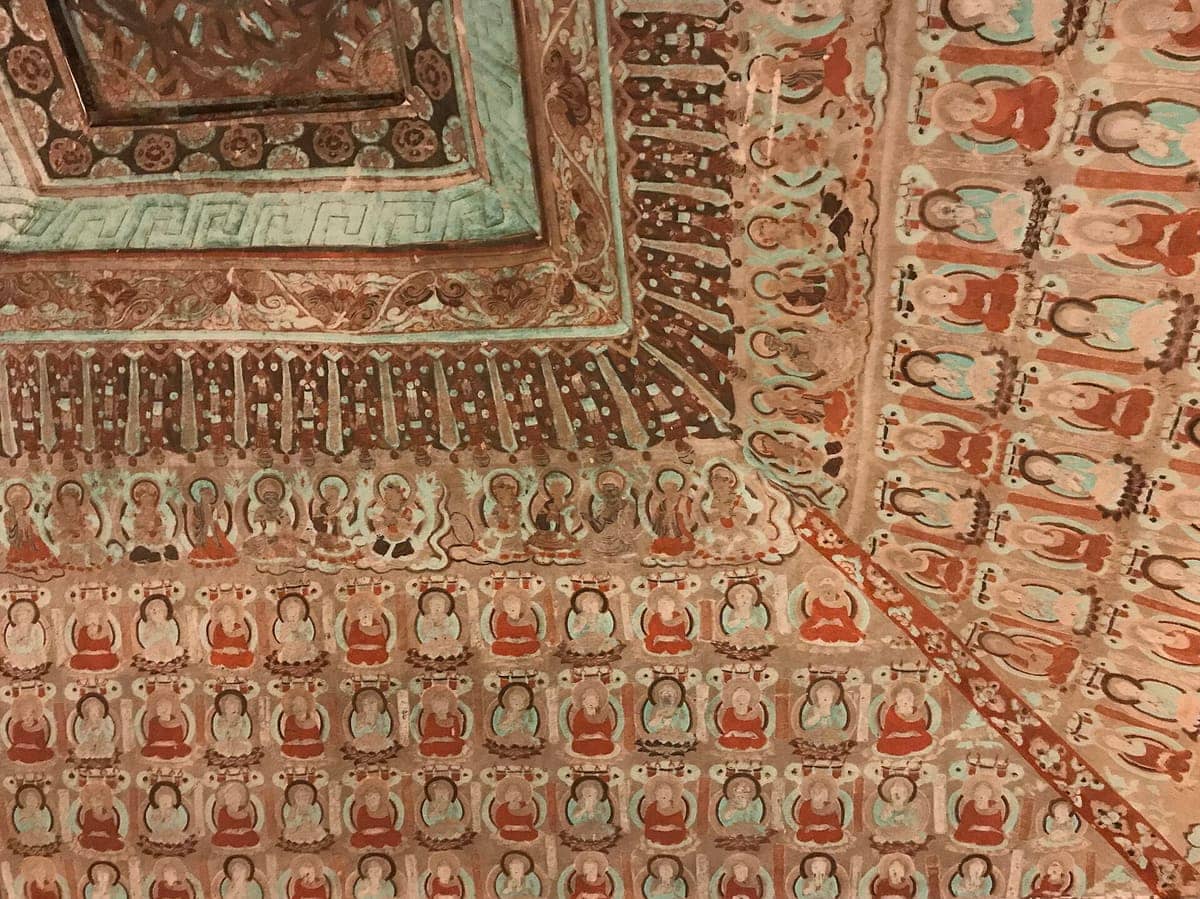
What Is Nirvana?
For a word this famous, nirvana is almost universally misunderstood. In casual English it means a state of perfect bliss — a beach, a band, a feeling of having arrived. The actual term means something closer to the opposite of arriving anywhere: it means going out, as a flame goes out. And once you see what it points at, you find the same target sitting at the center of nearly every contemplative tradition on earth, under a dozen different names. That convergence — many traditions, one liberation — is the real story.
What nirvana actually means in Buddhism
The Sanskrit nirvāṇa literally means “to extinguish” or “to blow out” — the way you blow out a candle. The question is: extinguish what? Not the self into nothingness, as the Western caricature has it. What goes out are the three fires the Buddha named as the engine of all suffering: craving, aversion, and delusion. Nirvana is the state in which those fires are spent.
The result is not annihilation and not a heaven. It is the end of dukkha — the deep dissatisfaction that drives ordinary life — and, with it, release from samsara, the exhausting cycle of rebirth and re-death. The Dhammapada frames the whole spiritual task as exactly this: the cooling of a mind no longer jerked around by wanting and hating (Dhammapada, ch. 1). Nirvana, then, is less a place you reach than a fever that breaks. The Buddha was famously reluctant to describe it in positive terms at all, precisely because every description turns it back into one more thing to crave.
The same goal under other names
Here is where it gets striking. Set the traditions side by side and the same liberation appears again and again — differently mapped, recognizably the same shape.
- Hinduism calls it moksha: release from samsara, the dropping of the illusion of separateness, the realization that atman (the self) and Brahman (ultimate reality) were never two. The Bhagavad Gita and Upanishads describe it as the soul’s freedom from the wheel of becoming.
- Jainism calls it kevala — the soul, finally cleansed of accumulated karma, restored to its own infinite clarity.
- Christian mysticism speaks of theosis and union with God — “partakers of the divine nature” (2 Peter 1:4) — the dissolving of the self-willed ego into the divine life. Paul: “I live; yet not I, but Christ liveth in me” (Galatians 2:20).
- Sufism calls it fana — the passing-away of the ego in God, followed by baqa, abiding in God.
- Taoism points at effortless union with the Tao, the small self forgotten.
The common thread is unmistakable: liberation, in every case, is the extinguishing of the grasping, separate self and its merging into — or release into — a larger reality that was always there. Traditions that never met built the same door. (This is also why nirvana and ego death get confused — but they’re not the same; more on that below.)
Why it’s not heaven — and not the band
Two clarifications save most of the confusion.
First, nirvana is not heaven. A heaven is a destination — a place the self goes and continues, rewarded and intact. Nirvana and moksha are transformations — the self doesn’t go somewhere better, it stops being a separate, craving self at all. That’s a categorically different claim. You can want heaven; wanting nirvana is, strictly, the last thing standing between you and it.
Second, nirvana is not a permanent mood. It isn’t the blissed-out feeling the word picked up in the West (or the album). Practitioners describe peace, yes — but the defining feature is freedom, the ending of compulsion, not a pleasant sensation that could itself be lost. And it differs from ego death, which traditions treat as a temporary experience — a glimpse through the door. Nirvana is the door standing permanently open: not a state you visit, but one you no longer leave.
What we actually know
What can be said plainly: nirvana is not the bliss-paradise the English word suggests, and the misunderstanding obscures something remarkable. Strip the term back to its meaning — the extinguishing of craving and the release of the separate self — and you find that the world’s contemplatives, working in isolation across millennia, kept describing the same liberation. Buddhist nirvana, Hindu moksha, Jain kevala, Christian union, Sufi fana, Taoist forgetting of self: different cosmologies, one recognizable freedom.
That convergence doesn’t prove a metaphysics, and no one can hand you the experience in a paragraph — by every account it’s the work of a life, not a fact to be learned. But the pattern is real and worth sitting with: the traditions disagree about almost everything except this — that the deepest freedom available to a human being lies on the far side of the grasping self, not in feeding it. What that’s worth is yours to weigh.
Existential Atlas maps these perspectives with the original sources side by side. What is ego death? → · or explore the question yourself.
Frequently asked questions
What does nirvana actually mean? Literally “to extinguish” or “blow out” — the going-out of the three fires of craving, aversion, and delusion. It’s the end of suffering (dukkha) and release from the rebirth cycle, not annihilation and not a paradise. What is ego death? →
What is the difference between nirvana and moksha? They’re the same goal mapped by different traditions. Nirvana is the Buddhist term (extinguishing the fires of craving); moksha is the Hindu term (release from samsara and the realization that the self and ultimate reality were never separate). How rebirth & reincarnation work →
Is nirvana the same as heaven? No. Heaven is a destination the self goes to and continues in; nirvana is a transformation in which the separate, craving self is extinguished. One is a place; the other is a release. What does heaven look like? →
Is enlightenment the same as nirvana? Closely related: “enlightenment” (bodhi) is the awakening — seeing reality as it is — and nirvana is the freedom that awakening brings. Other traditions name the same liberation differently: Christian union with God, Sufi fana, Taoist union with the Tao. Are all religions the same? →