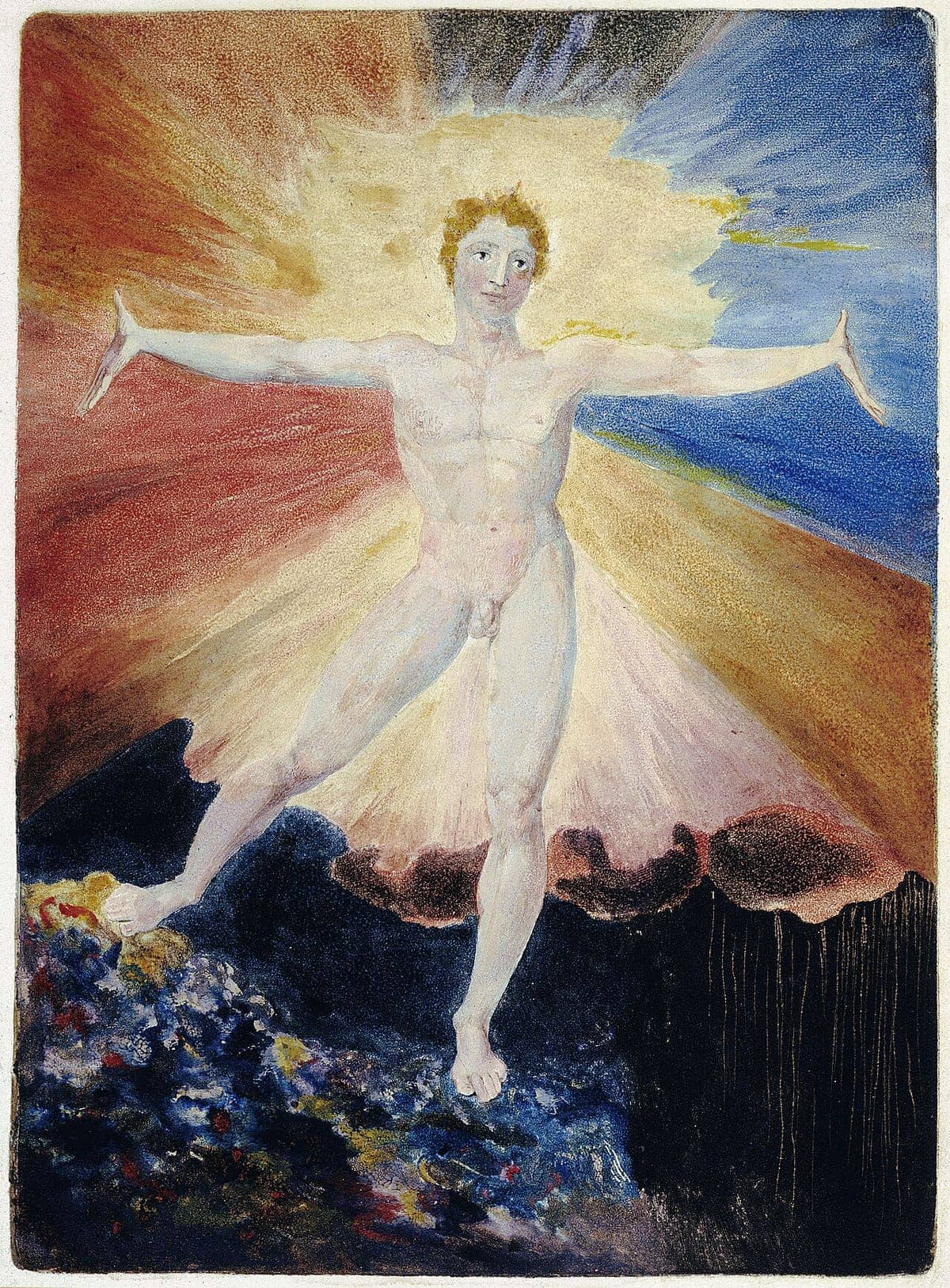
What Is Ego Death?
It sounds like the worst thing that could happen to a person, and nearly everyone who has been through it describes it as among the best. Ego death is the experience of the self — the constant inner “I,” the sense of being a separate someone behind your eyes — temporarily dissolving. The boundary between you and everything else thins and then disappears. It’s reported in deep meditation, in mystical states, under psychedelics, and at the threshold of death, by people with no connection to one another. And the striking thing, the thing worth the whole article, is that the world’s oldest traditions described it precisely — and treated it not as annihilation but as the doorway. Here is what it actually is, and how humanity mapped it long before it had the modern name.
What actually happens in ego death
The “ego,” in this sense, isn’t arrogance. It’s the ordinary, ever-present sense of being a bounded self — a me, located here, separate from the world out there. In ego death, that structure goes quiet. People describe the dividing line between self and surroundings dissolving; the sense of being a fixed someone gives way to a feeling of being part of one undivided whole. Time and the body recede. What’s almost universally reported alongside it is not terror but its opposite: a vast peace, a sense of coming home, and — most consistently — the falling away of the fear of death, because the “self” that could die is revealed, in the moment, as not the whole of what you are.
That is the experience. What makes it more than a curiosity is that it keeps showing up, in nearly the same words, in places that never compared notes.
The traditions named it centuries before psychology
Long before anyone called it ego death, the contemplative traditions built entire paths around exactly this dissolution — and they agree, across enormous distance, that the separate self is the thing standing in the way.
Buddhism is the most direct. Its core teaching of anatta — “no-self” — holds that the solid, permanent “I” we defend all day is a construction, not a fact, and that seeing through it is the heart of liberation. The very word nirvana means “to extinguish” — not the extinguishing of the person, but of the grasping self and the craving that fuels it. The Dhammapada treats the whole path as this waking up from the illusion of a separate ego.
Hindu philosophy arrives by the opposite road at the same place. In the Advaita (non-dual) tradition, the individual self — atman — is ultimately identical with Brahman, the single reality underlying everything; the felt separation is the illusion, and realizing the unity is the goal. The Upanishads circle this again and again: tat tvam asi, “thou art that.” Ego death, in this frame, is the moment the drop remembers it was always the ocean.
And the monotheisms, surprisingly, say it too. Sufism — the mystical heart of Islam — calls it fana: the annihilation of the self in God, the dissolving of the “I” so that only the Divine remains. Christian mysticism names the same movement “dying to self.” Paul wrote, “I am crucified with Christ: nevertheless I live; yet not I, but Christ liveth in me” (Galatians 2:20) — the small self emptied so something larger can fill it. Meister Eckhart preached a Gelassenheit, a letting-go of the ego so total it sounds like the Buddhists he never read. Taoism, for its part, dissolves the striving separate self into the effortless flow of the Tao. Four continents, four vocabularies, one report: the bounded self is the obstacle, and its quieting is the opening.
What the near-death accounts add
The people who have gone to the actual edge describe ego death’s fullest form — and their testimony lines up with the mystics with uncanny precision. Across thousands of near-death accounts, experiencers report the sense of individual identity expanding or dissolving into a boundless oneness, a merging with a loving light in which the separate self is both lost and somehow more itself than ever. The defining aftereffect is the same one the traditions promised: they return without the fear of death, convinced that the small, defended “I” was never the whole story. These accounts come from people of every background with no way to coordinate, gathered by researchers at the Near-Death Experience Research Foundation and studied for decades at the University of Virginia’s Division of Perceptual Studies. They don’t settle what the experience ultimately is. They do show that the dissolution of the ego, and the peace on the far side of it, is reported at the literal threshold of death exactly as the contemplatives described it from the meditation cushion.
What we actually know
A word of honesty and care first: this is a map for understanding, not a how-to. The traditions that sought ego death pursued it through long discipline and usually under guidance, precisely because the dissolving of the self can be disorienting; this article is here to explain the experience, not to instruct anyone to chase it.
What the sources establish is striking enough on its own. The experience of the separate self dissolving — and the peace, unity, and loss of death-fear that accompany it — is one of the most consistently reported experiences in the human record, described in nearly identical terms by Buddhist and Hindu sages, Sufi and Christian mystics, and people clinically at the edge of death. Those sources borrowed nothing from each other. None of them treat the experience as the end of you; all of them treat it as the moment you discover you were more than the small self you’d taken yourself to be. That convergence is real and it is deep. It is not proof of any single metaphysics. But it is strong enough that the thing we spend our lives defending — the separate “I” — may be, as every one of these traditions insists, less solid and less final than it feels.
Existential Atlas maps these perspectives with the original sources side by side. What is the soul? → · or explore the question yourself.
Frequently asked questions
What does ego death feel like? People describe the boundary between self and world dissolving, a sense of merging into one undivided whole, the recession of time and body, and — most consistently — a vast peace and the falling away of the fear of death. It is rarely reported as terrifying; far more often as a homecoming. Does consciousness survive death? →
Is ego death the same across religions? Remarkably close. Buddhism calls it seeing through the “no-self,” Hindu Advaita the merging of atman into Brahman, Sufism fana (annihilation in God), and Christian mysticism “dying to self.” Different vocabularies, the same dissolution of the separate “I.” What is the soul? →
Is ego death dangerous? It can be disorienting, which is why the traditions pursued it through discipline and guidance rather than casually. This article is orientation, not instruction — it explains the experience rather than recommending anyone seek it. What is an existential crisis? →
Do near-death experiences involve ego death? Many do — experiencers commonly describe individual identity expanding or dissolving into a boundless, loving oneness, and return without the fear of death, echoing the mystics almost exactly. Near-death experiences →