Do Animals Go to Heaven?
It is a child’s question and a grieving adult’s question, and they turn out to be the same question. Do animals go to heaven? Do dogs? When the dog who slept at the foot of the bed for fourteen years is suddenly gone, “where did he go?” stops being abstract. You are not asking for theology. You are asking whether the love you shared with a creature was real enough to outlast a heartbeat — whether something that clearly had an inner life, that greeted you and grieved and dreamed, simply switches off. Humans have asked this for as long as we have buried animals beside us, and the answers, laid side by side, are gentler and stranger than you might expect.
Do animals have souls in the first place?
The whole question turns on this, and the traditions split in revealing ways.
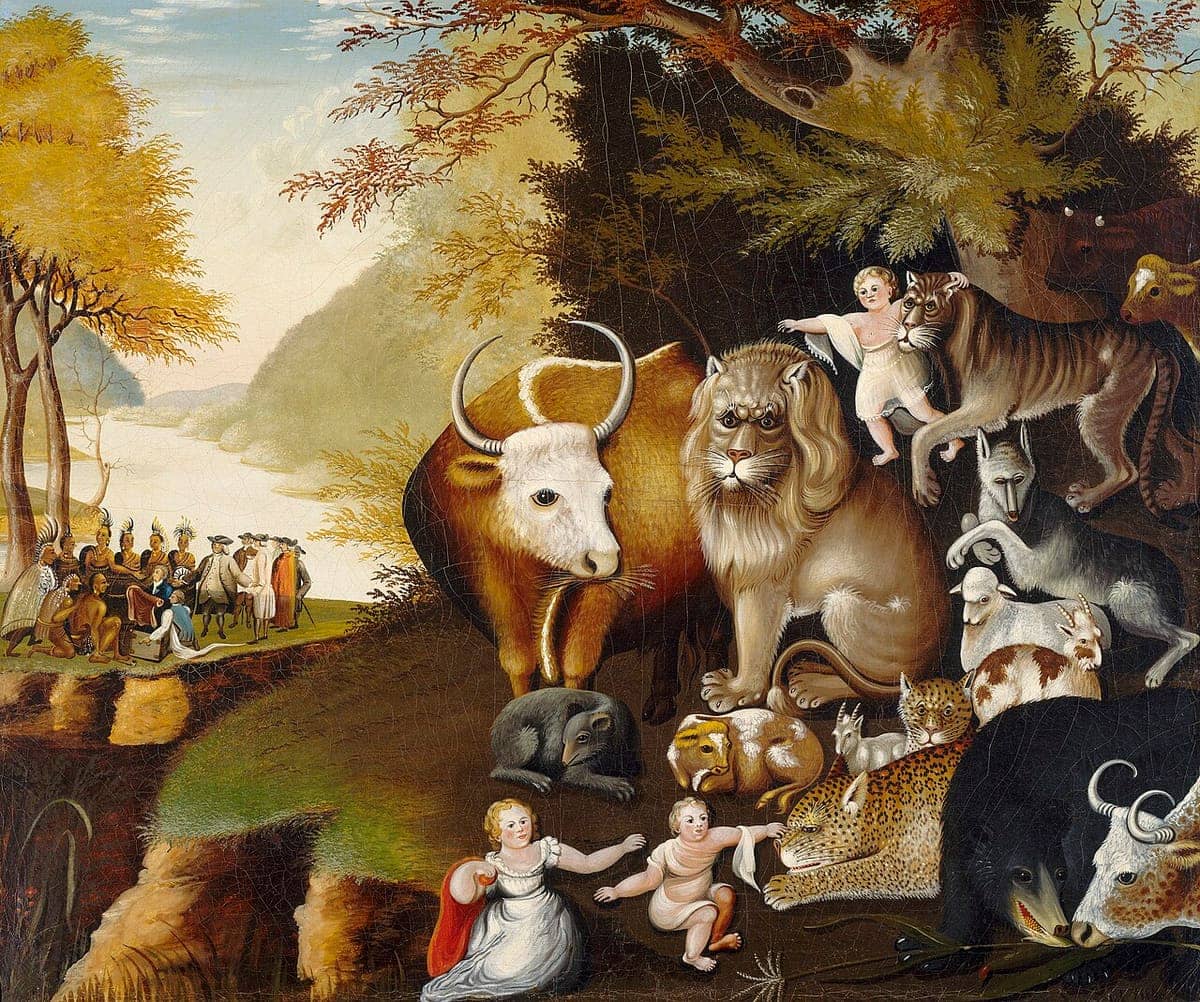
Christianity has argued with itself for centuries. The strict view, inherited from Aquinas and Aristotle, held that animals have sensitive souls — they feel, they perceive — but not the rational, immortal soul that survives death. Heaven, on that reading, is for humans. But Scripture itself is warmer than the doctrine. The Hebrew word nephesh — “living soul” — is applied to animals and humans alike in Genesis (“every living creature… wherein there is life,” Genesis 1:30). Ecclesiastes goes further and refuses the tidy hierarchy outright: “that which befalleth the sons of men befalleth beasts… they have all one breath” (Ecclesiastes 3:19, KJV). And Isaiah’s picture of the world made whole is full of animals — the wolf and the lamb, the lion and the calf (Isaiah 11:6). A renewed creation, in that vision, is not emptied of creatures. It is crowded with them.
The Eastern traditions never had the problem at all, because they never drew a hard line between human and animal souls. In Hindu and Buddhist thought, the same consciousness that animates you has worn, and will wear, countless forms. The animal at your feet is not a lesser kind of being; it is a being passing through an animal life on the same long road you are on. The Bhagavad Gita describes the self as something that simply changes bodies the way a person changes worn-out clothes (Bhagavad Gita 2:22) — and nothing in that image restricts it to human bodies.
What happens to an animal in the traditions that believe in rebirth?
If you grew up Western, this is the framework most likely to surprise you — and to comfort you in an unfamiliar way.
In the great wheel of samsara, animals are not outside the story of the soul. They are in it, fully. A consciousness can move into an animal life and out of it again, life after life, until it reaches release. Buddhism counts the animal realm as one of the six realms a being cycles through; the Dhammapada frames the entire human task as the mind’s slow purification across many lives (Dhammapada, ch. 1). On this view the question “does my pet go to heaven?” quietly dissolves into a different one: your pet does not stop. The stream of awareness that was him continues, takes a new form, keeps moving toward the same liberation everything is moving toward. Nothing that was alive is ever simply deleted. (How rebirth works across traditions →)
Indigenous and animist traditions hold something adjacent and just as old: that animals were never soulless objects to begin with. Many Native American, Aboriginal Australian, and African cosmologies regard animals as persons of a kind — kin with their own spirits, their own place in the web of the living and the dead. In a world where the bear and the river and the ancestor are all somebody, the death of a beloved animal is not the end of a thing. It is the return of a someone.
Do near-death accounts say anything about animals?
This is where the question gets quietly remarkable — because people who clinically died and came back sometimes mention pets, and they were not expecting to.
The near-death literature is best known for its convergences: the same tunnel and light, the same panoramic life review, the same deceased relatives waiting, the same loss of the fear of death, reported independently by people of every faith and of none. Less discussed, but recurring, is that some of these accounts include animals — a childhood dog bounding up to meet them, a lost cat present and whole, beloved pets among the figures who came forward in the light. People describe it the way they describe the human reunions: not as a symbol, but as a presence, recognized instantly, utterly alive. (Watch a firsthand account → )
It has to be said plainly: this is not proof, and Existential Atlas does not claim it is. People who already loved their animals might be expected to imagine them in a moment of crisis. But the pattern does not behave like wishful invention — it shows up unbidden, in accounts where the person was startled to find the animal there, reported alongside the same structural features that recur across thousands of independent cases collected by researchers at the Near-Death Experience Research Foundation and the University of Virginia’s Division of Perceptual Studies. Whatever the realm these people touched, it does not appear to be a humans-only place. (What people see in near-death experiences →)
Why does this question hurt the way it does?
Because the grief is real, and the love was real, and the doubt is the love turned inside out. The reason “is it just an animal?” feels like a betrayal to say out loud is that you already know the answer in the only place that decides these things — the place where you lived with the creature. The traditions, for all their disagreement, keep circling back toward your instinct rather than away from it: a Scripture that calls animals living souls and one breath with us, an Eastern map on which they were never separate from us at all, an animist world where they were always persons, and a body of firsthand testimony in which they show up, unannounced, in the light. (Will I see my loved ones again? →)
What we actually know
No one can prove that your pet is somewhere, and no one can prove that he isn’t. That is the honest floor, and it is the same floor we all stand on about ourselves. But notice what the patterns do and don’t establish. Across traditions that never spoke to each other, the hard line between human souls and animal souls keeps blurring — softened by Scripture, erased entirely in the East, never drawn at all by the world’s oldest spiritual cultures. And in the one body of firsthand testimony we have from the threshold, the animals are there. None of that is proof. All of it is real, and it points one direction. What it means — whether the dog at the foot of the bed is waiting — is the question no one else can answer for you. But you would not be unreasonable to hope. You would be in very old company.
Existential Atlas lays out these perspectives with the original sources side by side. Will I see my loved ones again? → · or explore the question yourself.
Frequently asked questions
Do dogs go to heaven? No tradition can prove it, but the case is gentler than the strict doctrine suggests: Scripture calls animals “living souls” and “one breath” with us, the Eastern traditions never separated animal and human souls at all, and some near-death accounts include a beloved dog present and whole in the light. The pattern leans toward yes; the certainty isn’t there. Will I see my loved ones again? →
Do animals have souls according to the Bible? Scripture is warmer on this than later doctrine. The Hebrew nephesh — “living soul” — is applied to animals as well as humans, Ecclesiastes says man and beast “have all one breath,” and the prophetic vision of a renewed world is full of creatures. The strict theological view limited the immortal soul to humans, but the texts themselves resist the tidy line. What the Christian afterlife actually says →
Do pets get reincarnated? In Hindu and Buddhist thought, animals are fully inside the cycle of rebirth — the same consciousness moves through human and animal lives alike, life after life, until release. On that map a pet’s death is not deletion but transition. How rebirth and reincarnation work →
Have people seen pets in near-death experiences? Some near-death accounts do include animals — a childhood dog, a lost cat — present and whole in the light, described with the same startled recognition as the human reunions. It is not proof, but it is a recurring detail people did not expect to report. What people see in near-death experiences →
Will I see my pet again when I die? No one knows. But the traditions keep softening the line between animal and human souls, and the firsthand accounts from the threshold are not humans-only. The pattern is real; what it means is yours to decide. Will I see my loved ones again? →