What Is the Point of Life?
There’s a particular weight in this version of the question. “What is the meaning of life” can be asked with curiosity, over coffee. “What is the point” is usually asked at a lower moment — by someone who has started to suspect the honest answer might be none. It’s the question with the trapdoor under it. So it deserves an answer that doesn’t flinch: not a motivational poster, but a real accounting of how the people who took the suspicion of pointlessness most seriously — philosophers, mystics, and the thousands who have died and come back — actually answered it. What follows is the pattern they keep arriving at, across traditions that never compared notes.
What if there really is no point?
Start with the hardest position, because pretending it away helps no one. Nihilism says it plainly: the universe is indifferent, no cosmic purpose was assigned to you, and any meaning is invented. A great deal of modern thought has stared straight at this. The strange thing — the thing worth sitting with — is that the thinkers who looked longest into that void did not, mostly, come back recommending despair.
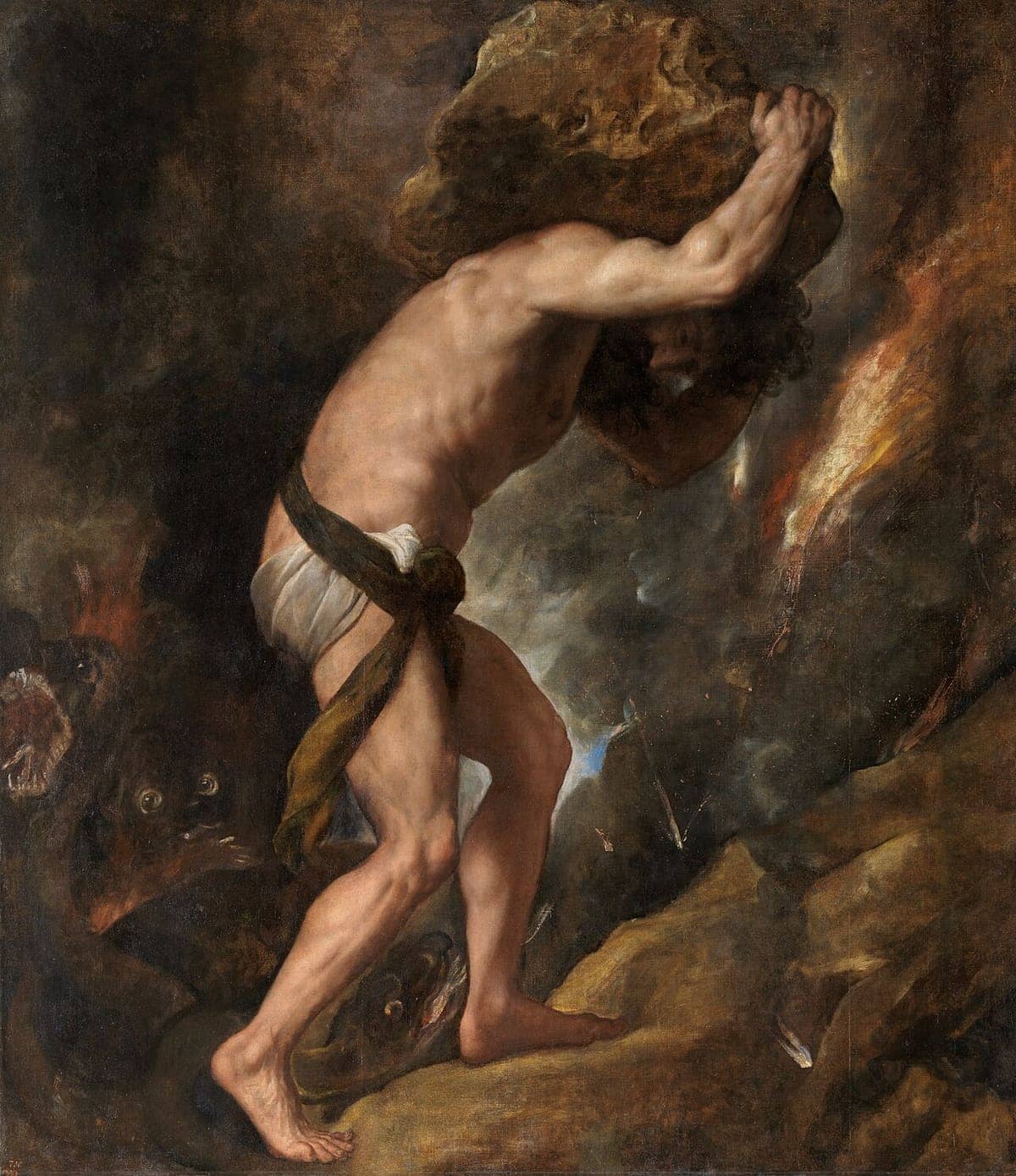
Nietzsche, who announced the collapse of inherited meaning more bluntly than anyone, did not conclude that life was worthless; he concluded that the task had changed — that a person now had to create values rather than inherit them, and he treated that as the most serious and even exhilarating work a human could do. Camus took the absurd — our hunger for meaning meeting a silent universe — and refused both suicide and false hope, arguing instead that one could live fully, even happily, in honest revolt against the silence. The point, for these thinkers, was not handed down. It was the thing you were here to forge. That the bleakest philosophers landed on make it yourself rather than give up is the first crack of light in the question.
The traditions answer a different way — and agree more than they should
Step outside the West and the question barely makes sense in the form we ask it, because most traditions don’t locate the point in some external justification at all. They locate it in how you live and what you become.
The Stoics put the point inside your own conduct: you don’t control outcomes, status, or how long you get, but you control how you meet them, and a life built on that is already complete (Meditations). Buddhism reframes the question entirely — the felt pointlessness, in its diagnosis, comes from chasing permanence in a world that offers none; the “point” is to wake up from that chase, and the Dhammapada treats this awakening as the whole of the path. The Bhagavad Gita answers Arjuna’s paralysis on the battlefield — a man asking, in effect, what the point of any of it is — by telling him to act with devotion and without grasping at the fruits of his action (Bhagavad Gita).
And the tradition that sounds most like modern despair is older than all of them. Ecclesiastes opens “Vanity of vanities; all is vanity” (Ecclesiastes 1:2) — a man with every accomplishment, looking at the lot of it and feeling the floor give way. The book doesn’t rush to patch him up. It sits in the emptiness and arrives, slowly, at something quiet: eat, work, love the people in front of you, and hold the rest with open hands. Notice the convergence — Stoic, Buddhist, Hindu, and Hebrew wisdom, with no shared origin, all relocate the point away from cosmic justification and into presence, conduct, and letting go. That is not the answer of people who found life pointless.
What the people who died and came back report
Here is the testimony that the question of pointlessness least expects, and it may be the most striking convergence in the whole corpus. People who have clinically died and been resuscitated — across every culture and belief and none, with no way to coordinate their accounts — come back describing the same discovery: that the things they had treated as the point were not, and the things they’d overlooked were.
The pattern recurs with uncanny consistency. A life review in which the whole of one’s life is replayed and felt from the inside of everyone it touched — and what registers as significant in that review is never the career, the wealth, or the status. It is the small, unglamorous moments of kindness and connection. Experiencers return saying the “point,” felt rather than argued, was love and how you treated people — the same conclusion Ecclesiastes and the Stoics reached by reflection. Researchers who have catalogued thousands of these accounts at the Near-Death Experience Research Foundation and the University of Virginia’s Division of Perceptual Studies don’t agree on what the experiences ultimately are. They agree, with remarkable consistency, on what gets reported about what matters. The pattern is overwhelming. What it adds up to is yours to weigh.
What we actually know
No one can hand you the point of your life from the outside — not a philosopher, not a scripture, not this page. If there’s a hard floor under the question, it’s that: the meaning is non-transferable, and anyone selling you a finished one is selling something.
But “you have to supply it” is not the same as “there isn’t one,” and that distinction is the whole ballgame. Across sources that borrowed nothing from each other — the philosophers who stared into the void, the contemplative traditions of three continents, and the firsthand reports from the edge of death — the same answer keeps surfacing: the point was never a cosmic memo. It is built, in how you live and whom you love, and the people who got closest to the end describe it in almost embarrassingly simple terms. That convergence is real. It is not proof. But it is strong enough that “life is pointless” looks less like the clear-eyed conclusion and more like the question asked before the answer arrives.
Existential Atlas maps these perspectives with the original sources side by side. What is the meaning of life? → · or explore the question yourself.
Frequently asked questions
Is there really a point to life, or do we just make one up? The thinkers who took pointlessness most seriously — Nietzsche, Camus — concluded not that life is worthless but that meaning is created rather than inherited. The contemplative traditions agree the “point” isn’t an external justification but something realized through how you live. What is the meaning of life? →
What’s the difference between the meaning of life and the point of life? They’re nearly the same question, but “point” carries a sharper doubt — it’s usually asked by someone who suspects there isn’t one. The traditions answer both the same way: by relocating significance from cosmic purpose to presence, conduct, and connection. Why am I here? →
What do near-death experiences say the point of life is? Many experiencers describe a life review in which what registers as significant is never achievement or status, but small acts of love and kindness — a “point” felt rather than argued, consistent across thousands of independent accounts. Near-death experiences →
If life has no inherent point, why keep going? Because, in nearly every account that has examined it — Stoic, Buddhist, existentialist, and the reports from the edge of death — meaning turns out to be supplied rather than found, and the act of building it is itself the point. Why do we suffer? →