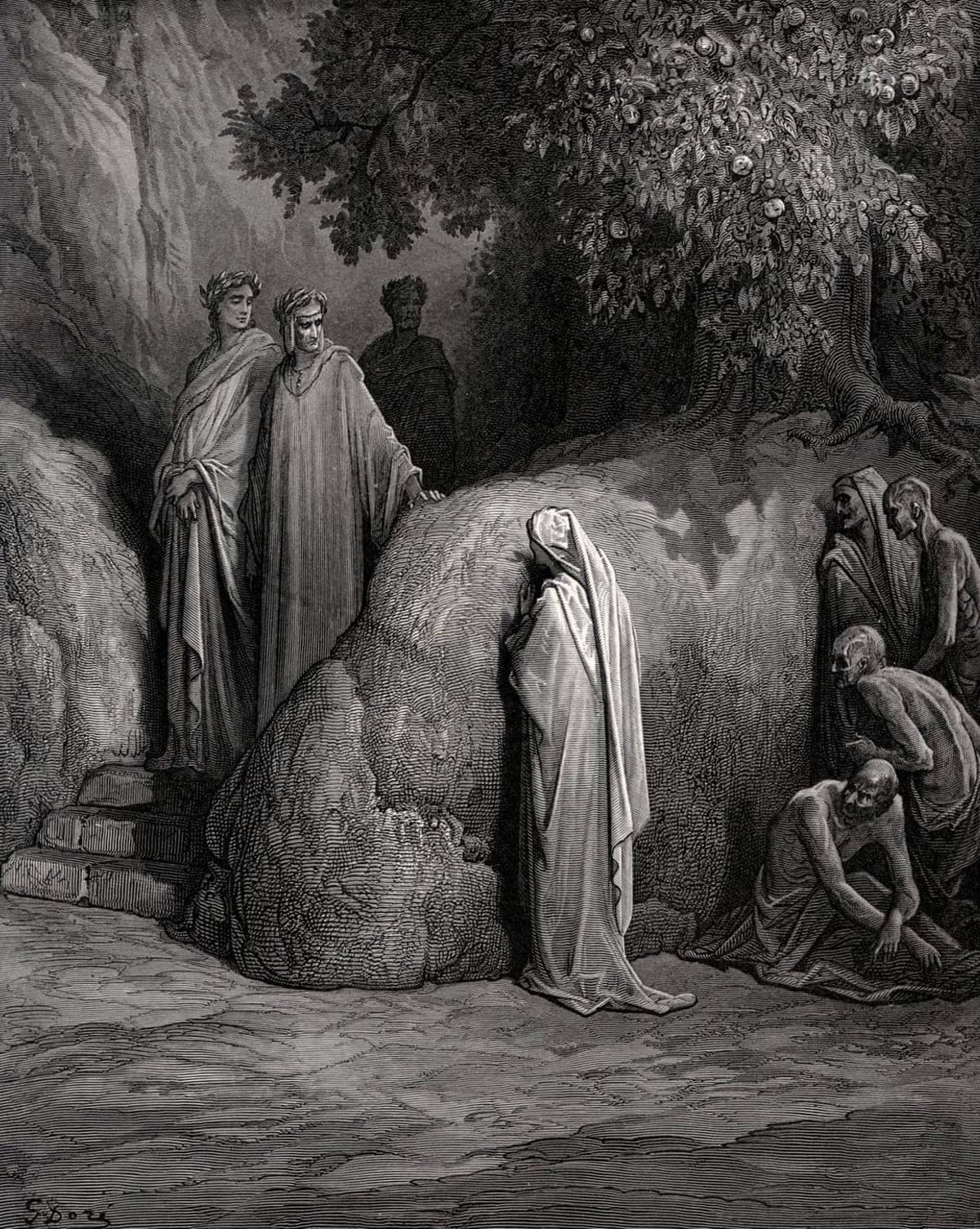
What Is Purgatory?
Most people meet the word through Dante, or a half-remembered line from catechism, and carry away a vague picture: somewhere between heaven and hell, where you wait. The fuller idea is more interesting than the cartoon, and it turns on a very human intuition — that few of us are, at the moment of death, simply finished, ready to step straight into a final and perfect state. Purgatory is one tradition’s answer to that intuition. But the intuition itself is nearly universal, and the most surprising thing about purgatory is how many traditions that never spoke to each other arrived at some version of the same in-between. Here is what it actually means, whether scripture supports it, and how widely the idea recurs.
What purgatory actually is
In Catholic teaching, purgatory is not a second chance and not a halfway hell. It is a state of purification for souls who die in God’s grace but still carry the residue of sin — not the damned, but the saved who aren’t yet wholly clean. The image is fire, but corrective fire: a final purging that makes a soul fit for the presence of God. The crucial distinction, often missed, is that everyone in purgatory is heaven-bound. It is a threshold, not a destination — the mudroom of paradise, not a prison.
The doctrine answers a real theological pressure: if nothing impure can stand in the full presence of the divine, but most people die neither saintly nor damned, what happens to the vast middle? Purgatory is the bridge built across that gap.
Is purgatory in the Bible?
This is the honest crux, and it’s the question people actually search — so it deserves a straight answer. The word “purgatory” appears nowhere in the Bible. The doctrine is inferred from several passages rather than stated, which is exactly why it became one of the sharpest dividing lines of the Reformation: Catholics read it in; most Protestants read it out.
The texts most often cited: Paul writes that a person’s work will be tested by fire, and “if any man’s work shall be burned, he shall suffer loss: but he himself shall be saved; yet so as by fire” (1 Corinthians 3:15) — saved, but through a purifying fire. Jesus refers to a sin that will not be forgiven “neither in this world, neither in the world to come” (Matthew 12:32), which implies some forgiveness is possible after death. And 2 Maccabees describes prayer for the dead so that they might be “loosed from sins” — a book in the Catholic canon but not the Protestant one, which is part of why the two traditions diverge. None of these say “purgatory.” Whether they point to it is precisely the centuries-old argument. The fair summary: purgatory is a reasoned interpretation of scripture, not a verse you can quote.
The same in-between, across the world’s traditions
Here is where the question opens up. Set purgatory beside the rest of humanity’s afterlife maps and a pattern appears that’s hard to ignore: the idea of an intermediate state — a purification or passage between death and the final condition — shows up almost everywhere, independently.
Islam describes barzakh, a barrier or interval between death and the Day of Resurrection where the soul waits and begins to experience the consequences of its life; the Quran speaks of a barrier “behind them” until the day they are raised (Quran 23:100). Tibetan Buddhism maps the bardo in extraordinary detail — the intermediate state between death and the next rebirth, the whole subject of the Tibetan Book of the Dead, a guide for navigating exactly that passage. Judaism developed the idea of Gehenna not primarily as eternal hell but, in much rabbinic thought, as a temporary state of purification lasting up to twelve months — which is part of why the mourner’s Kaddish is traditionally recited for eleven. Zoroastrianism, Hinduism’s intermediate realms, and Chinese folk traditions of a judged passage all sound the same note.
The traditions disagree completely on the mechanics — fire or rebirth, months or aeons, prayer or karma. But the underlying intuition recurs with remarkable consistency: death is not, for most souls, an instant final verdict. There is a between. That so many separate cultures built one is itself worth sitting with.
What we actually know
Honesty first: no tradition can show you the floor plan of the afterlife, and the specifics of purgatory — its fire, its duration, its very existence — are matters of faith and interpretation, not established fact. The Reformation split over exactly this, and that disagreement is real.
But strip the question to its frame and something steadier appears. Across traditions with no shared origin — Catholic purgatory, Islamic barzakh, Tibetan bardo, Jewish purification — humanity keeps arriving at the same shape: that what comes immediately after death is, for most, a passage and a purifying rather than an instant arrival. The details contradict each other; the intuition does not. That convergence isn’t proof of any one map. But it does suggest the idea behind purgatory — that we are not, at the last breath, simply done — is one of the most widely shared answers the species has ever given to what happens next.
Existential Atlas maps these perspectives with the original sources side by side. What happens when you die? → · or explore the question yourself.
Frequently asked questions
Is purgatory in the Bible? The word never appears. The doctrine is inferred from passages like 1 Corinthians 3:15 (“saved; yet so as by fire”), Matthew 12:32, and 2 Maccabees — which is why Catholics affirm it and most Protestants reject it. It’s a reasoned interpretation, not a quotable verse. Is hell real? →
What’s the difference between purgatory and hell? Everyone in purgatory is heaven-bound — it’s a temporary purification, not damnation. Hell, in the traditions that teach it, is final. Purgatory is a threshold; hell is a destination. Is hell real? →
Do other religions believe in purgatory? Not by that name, but the idea of an intermediate state recurs widely: Islam’s barzakh, Tibetan Buddhism’s bardo, and the Jewish understanding of Gehenna as temporary purification all describe a passage between death and the final state. What happens when you die? →
How long does purgatory last? There’s no fixed answer — Catholic teaching frames it as however long purification requires, not a set sentence, and explicitly discourages literal timekeeping. Other traditions vary widely (rabbinic thought often says up to a year; the bardo is traditionally up to 49 days). Where do you go when you die? →