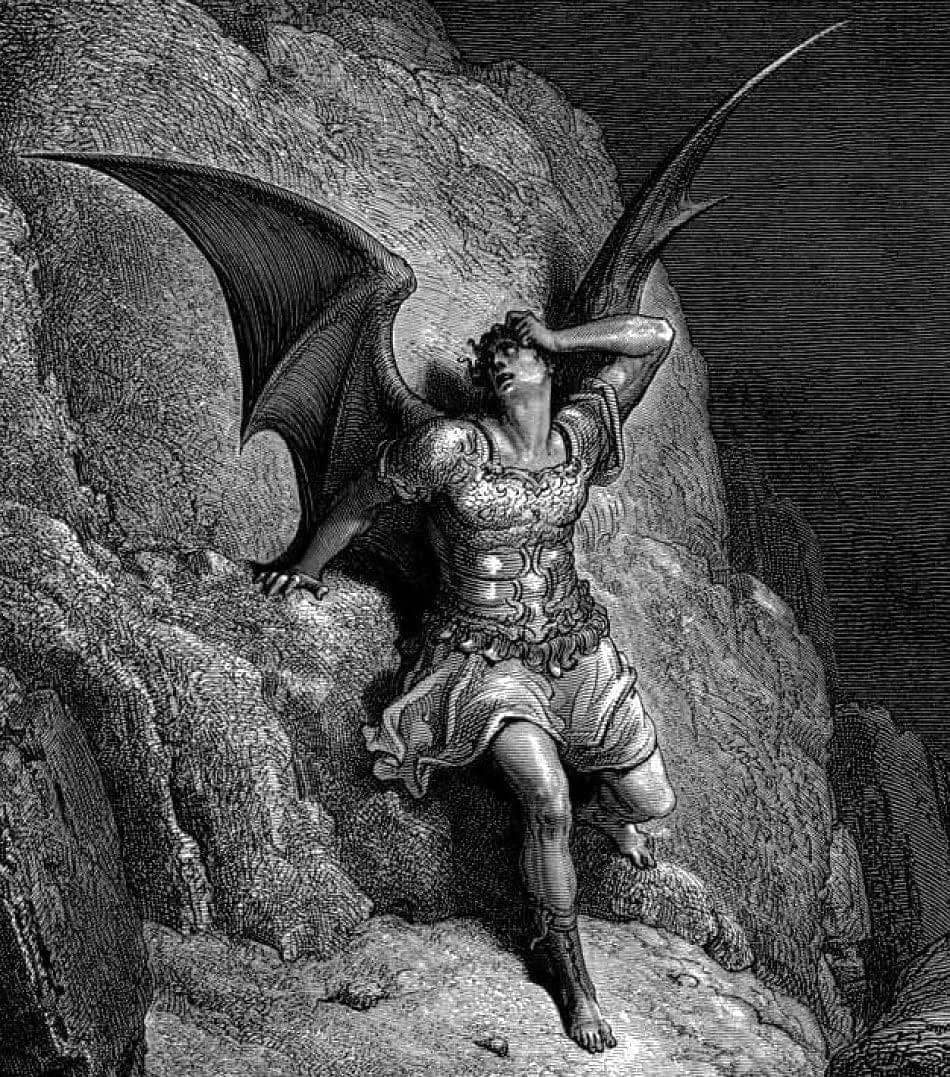
The Problem of Evil
Here is the argument in its sharpest form, roughly as Epicurus is said to have posed it more than two thousand years ago. If God is willing to prevent evil but not able, then God is not all-powerful. If God is able but not willing, then God is not good. If God is both able and willing, then where does evil come from? It is short, it is brutal, and almost nobody who has felt real suffering has failed to think some version of it. Put in plainer words, it is the question people actually ask at a hospital bedside: why does God allow suffering? The problem of evil is the oldest and hardest objection ever raised against the idea of a good and powerful God — and the responses it has provoked are some of the most serious thinking the human race has done.
Why is the problem so hard to dissolve?
Notice first that the problem only bites under specific conditions. It requires a God who is one, good, all-powerful, and involved — the God of the monotheisms. A universe of many quarreling gods, or no god at all, or an impersonal order that was never promised to be fair, faces no contradiction when a child suffers. The sharpness of the problem is the price of a particular hope: that behind everything stands a single benevolent power who could intervene.
So the question is really a family of questions, and the traditions split on which one they are answering. Some accept the premise and try to reconcile it. Others quietly reject the premise itself. Both moves recur across centuries and cultures, which is the first sign we are looking at something structural in human thought rather than one religion’s local embarrassment.
Could evil be the cost of freedom?
The most durable answer is the free-will defense. A world of genuinely free beings — beings who can love, choose, and create — is a world where they can also betray, exploit, and destroy. You cannot have the first without the possibility of the second; a love that cannot be refused is not love, and a courage that cannot fail is not courage. On this view God permits evil not because He wills it but because He wills us, and we are the ones who do the harm.
The Hebrew Bible plants this early: humanity is placed in the garden with a real choice and real consequences (Genesis 2–3, KJV Bible). It is the backbone of the Christian and Jewish answer, and Islam shares its shape — human beings are given trust and held accountable for what they do with it (Quran 33:72). The free-will defense handles a great deal. What it strains to cover is the suffering no human chose: the earthquake, the cancer in a child, the tsunami. For that, a different answer is needed.
What if suffering is the forge, not the flaw?
The second great response is soul-making, given its modern form by the philosopher John Hick but rooted in something ancient. A world without hardship, the argument runs, could never produce real virtue. Courage requires danger, compassion requires suffering to answer, patience requires delay. A frictionless paradise would be a nursery, not a place where souls grow into something. Evil and pain are the resistance against which a person becomes a self.
The Apostle Paul makes the same move — “tribulation worketh patience; and patience, experience; and experience, hope” (Romans 5:3–4, KJV Bible). The Stoics built a whole philosophy on it; Marcus Aurelius trained himself to treat every obstacle as material for the practice of virtue (Meditations). This is also where many traditions quietly converge with a strange piece of modern testimony — the people who have died and come back, almost all of whom return describing their hardest experiences as the ones that mattered most, the ones that taught and shaped them. We’ll come back to that, because it is doing more work than it first appears.
Does God have to answer at all? The book of Job.
There is an older and stranger response, and it belongs to the book of Job. Job is a good man destroyed for no reason he can see, and for thirty-some chapters his friends insist he must have earned it — the universe is fair, so he must be guilty. Job refuses the lie. He demands an answer. And when God finally speaks from the whirlwind, He does not give one. He asks instead: Where wast thou when I laid the foundations of the earth? (Job 38:4, KJV Bible).
This is not an explanation. It is a refusal to explain — and a reframing of who is in a position to understand. Job’s comfort, such as it is, comes not from a reason but from an encounter with something vast enough that the question changes shape. It is the most honest thing the scriptures do with suffering: they let it stand unexplained, and insist that unexplained is not the same as meaningless. Process theology, a more recent strand, takes the radical step of revising the premise instead — proposing a God who is perfectly good but not all-controlling, who suffers alongside creation rather than overriding it. The contradiction dissolves, but at the cost of the omnipotence the original problem assumed.
What if the premise itself is the mistake?
Step outside monotheism and the problem looks different — not solved, but reframed out of existence. The Eastern traditions never began with the promise of a fair, intervening God, so they owe no defense of one.
In Hinduism and Buddhism, suffering is woven into the structure of conditioned existence and answered not by a verdict but by a law: karma, cause and consequence running across lifetimes, and a path out of the whole machinery. The first noble truth of Buddhism simply names suffering as the ground fact of life (Dhammapada) — there is no good God who needs excusing, only a condition to be understood and, eventually, released. Taoism goes further still: nature is not cruel, it is impartial; the Tao “treats all things as straw dogs,” indifferent in the way the seasons are indifferent (Tao Te Ching). What looks like evil is the friction of a reality that was never engineered for our comfort. The problem of evil, on this reading, is a problem you create by demanding the universe be something it never claimed to be.
What the near-death accounts quietly suggest
Here is the convergence that is hard to set down once you’ve seen it. Among the thousands of people who have clinically died and returned, the life review is one of the most consistently reported moments — and it carries a strange verdict on suffering. People describe re-living their lives not from their own eyes but from the perspective of everyone they affected, feeling the harm they caused as the other person felt it, and the kindness they gave as it landed. (Watch a firsthand account of the life review → (Ishtar Howell))
What almost none of them report is a cruel or arbitrary judge. They report a presence experienced as wholly loving — and, again and again, they say the pain in their lives was not punishment but somehow part of what they came to learn. This is not a philosophical argument; it is testimony, collected and catalogued by researchers at organizations like the Near-Death Experience Research Foundation and the University of Virginia’s Division of Perceptual Studies. It proves nothing about God’s goodness. But it lines up, eerily, with the soul-making answer the philosophers reasoned their way toward — that suffering is the forge — reached from the opposite direction by people who weren’t arguing a case. The pattern is there. What it means is the open question.
What we actually know
No one has dissolved the problem of evil. The free-will defense leaves natural suffering uncovered; soul-making struggles with the suffering that destroys rather than refines; Job answers by refusing to answer; the Eastern reframe only works if you give up the personal, intervening God that made the problem urgent to begin with. Every response trades one difficulty for another, and an honest person can sit with all of them and still not be satisfied.
What we can say is that the question is structural, not naive — humanity’s most serious minds have circled it for millennia without closing it. And running underneath the arguments is a quieter, stranger pattern: that those who report coming back from death almost never describe the suffering they passed through as senseless. The reasoning and the testimony point, from opposite ends, at the same unprovable suggestion — that the pain might mean something. No tradition has demonstrated that it does. The pattern is real; the meaning is yours to weigh.
Existential Atlas lays these answers out with the original sources side by side. Why do we suffer? → · or explore the question yourself.
Frequently asked questions
Why does God allow suffering? No tradition has fully answered it, but the serious responses fall into a few families: that suffering is the price of genuine human freedom (the free-will defense); that it’s the forge in which character and virtue are made (soul-making); that God doesn’t owe us an explanation and we’re not positioned to grasp one (Job); or — stepping outside monotheism — that the premise of a single all-controlling, all-good God is itself the mistake (the Eastern reframe). Each handles part of the problem and strains on the rest. Why do we suffer? →
What is the free-will defense to the problem of evil? It’s the argument that a world of genuinely free beings — capable of love and goodness — must also be capable of evil, since a choice that can’t go wrong isn’t really free. On this view God permits evil as the price of human freedom, not because He wills it. It handles human-caused harm well, less so natural suffering. Why do bad things happen to good people? →
Does the book of Job solve the problem of evil? Not by explaining it. Job demands a reason for his suffering and God answers from the whirlwind without giving one — instead reframing whether any human is positioned to understand. It is scripture’s most honest treatment of suffering: it lets the pain stand unexplained while insisting unexplained is not the same as meaningless. Why do we suffer? →
How do Buddhism and Hinduism answer the problem of evil? They largely reject its premise. With no single all-powerful, all-good God to defend, there is no contradiction to resolve — only suffering as a fact of conditioned existence, answered by karma and a path of release rather than a verdict on God’s justice. Is there karma? →
Is suffering ever fair? No tradition has shown that it is, and the visible distribution of suffering rarely looks just. But the recurring intuition across soul-making philosophy and near-death testimony is that suffering may be formative rather than merely cruel — a claim no one can prove, and that you have to weigh for yourself. Why do bad things happen to good people? →