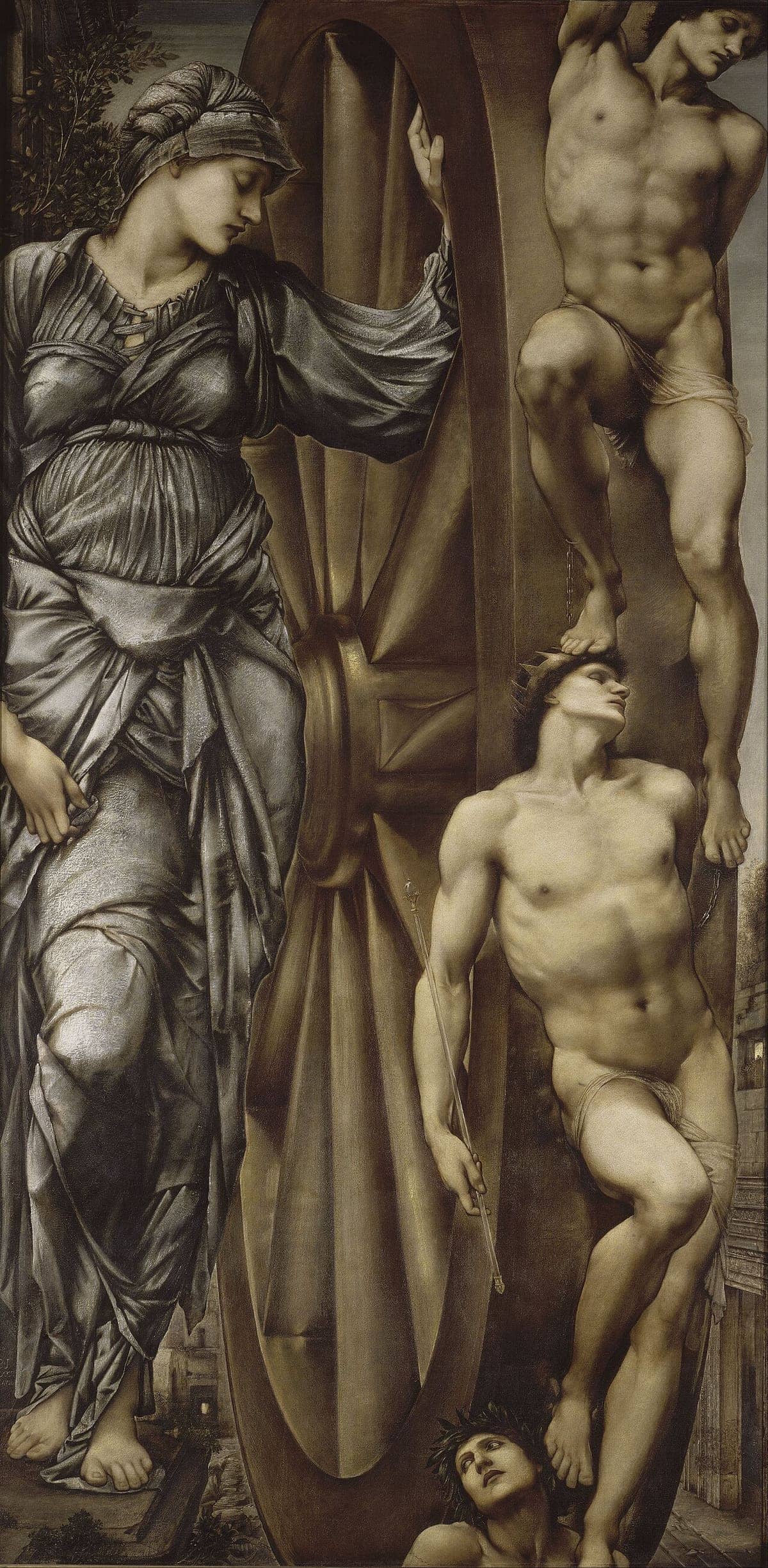
Destiny vs Free Will
Sit with almost any large decision long enough and the floor gives way. You feel yourself choosing — weighing, deciding, committing — and at the very same moment you suspect the choice was somehow already in motion before you arrived at it. Were you free, or were you carried? It is one of the oldest questions a mind can ask of itself, and the strange thing is how rarely anyone lands cleanly on one side. Strip away the assumption that fate and freedom must be enemies, and a pattern appears across thousands of years of thought: again and again, the most serious traditions refuse to pick. They find a third thing in the middle.
Did the Stoics solve it first?
The Stoics looked the problem dead in the eye. They were determinists — they believed the universe runs on an unbroken chain of cause, what they called fate, woven so tightly that nothing could have happened otherwise. And yet they were not fatalists who shrugged and went limp. Their move was subtle and it has never really been improved on: the events that reach you are fated, but your assent to them is yours. You don’t choose the wave; you choose how you meet it.
Epictetus, who had been a slave, drew the line with brutal clarity — some things are up to us, and some things are not, and nearly all our suffering comes from confusing the two. Marcus Aurelius, writing privately at the edge of an empire he did not ask to rule, kept returning to the same discipline: accept what is given, govern what is yours, and find your freedom precisely there (Meditations →). The Stoic answer is not “you are free” or “you are fated.” It is both at once, sorted by jurisdiction.
How do the karmic traditions hold both?
Travel east and the question changes shape but not substance. In the karmic frame — across the Hindu and Buddhist streams — your present circumstances are the ripened fruit of past action, your own, carried forward. That sounds like fate, and people often mistake it for fate. But karma is not a sentence handed down from outside; it is the lawful echo of choices, which means the next choice is genuinely open. You are reaping, yes — and you are also, right now, sowing.
The Bhagavad Gita stages this exact tension on a battlefield: Arjuna wants to refuse his role, and Krishna’s answer is neither “do whatever you like” nor “you have no say.” It is act, fully and freely, but release your grip on the outcome (Bhagavad Gita →). Do the deed; surrender the result. It is remarkable how close that lands to the Stoic split between what is yours and what is not — two civilizations with no contact arriving at nearly the same architecture: choose your action, accept the fall of events.
Can you be both predestined and free?
The Abrahamic traditions inherit the hardest version of the puzzle, because they place a God who knows the end from the beginning alongside human beings genuinely accountable for their choices. If the outcome is already known, in what sense is it chosen? The traditions have wrestled this for millennia and mostly landed not on a tidy answer but on a held tension — providence and responsibility, both real, both insisted upon.
The Hebrew Bible states the paradox without flinching: “I have set before you life and death, blessing and cursing: therefore choose life” (Deuteronomy 30:19) — a command that only makes sense if the choosing is real (Tanakh →). The Quran holds the same double grip: nothing befalls you but by God’s leave, and yet you will answer for what your own hands sent forward (Quran 4:79). Across all three, the working position is the one the Stoics and the karmic sages reached by other roads — a larger order is in motion, and your part within it is genuinely yours to play. (Do we choose our lives? →)
What does modern science say — and does it close the question?
The modern debate dresses the ancient one in new clothes. Physics describes a chain of cause; neuroscience watches decisions forming in the brain a beat before they surface as conscious “choice”; and a long line of philosophers argues that free will, as most people imagine it, can’t survive a fully determined universe. It is worth sitting with honestly. But notice what it does not settle: the live thinkers in this field largely converge on a familiar compromise — compatibilism, the view that freedom worth the name is the freedom to act from your own reasons and character, even inside a lawful world. Which is, almost word for word, where Epictetus and Krishna and Deuteronomy already stood. The science sharpens the question. It does not dissolve the experience of choosing, and it has not closed the case.
Does the view from the edge of death change the picture?
There is one more body of testimony, and it is unusually direct. People who clinically died and returned often describe a life review — every choice replayed, not as a verdict imposed from outside but felt from the inside, including how each decision landed on everyone it touched. What is striking, across thousands of independent accounts from people of every faith and none, is the consistency: the review is rarely experienced as fate’s ledger and almost always as their own choices coming home to them, owned, not assigned (Watch a firsthand account of the life review → (Ishtar Howell)). Many return convinced that their lives carried a shape they had agreed to — a destiny — and that within it the choosing was always, fully, real.
That convergence proves nothing on its own; these experiencers do not agree on what it means. But the pattern is hard to ignore: from the deathbed, the two halves people spend a lifetime tearing apart — a larger plan and a free hand — keep showing up fused. Researchers at the Near-Death Experience Research Foundation and the University of Virginia’s Division of Perceptual Studies have catalogued the life-review motif again and again. They differ on its cause. They agree on what was reported.
What we actually know
No one has proven whether the universe is fated, free, or some braid of the two — not the philosophers, not the physicists, not the saints. What we can say is that the deepest traditions, separated by oceans and centuries with no way to copy each other, keep refusing the clean either/or. Stoic assent, karmic responsibility, Abrahamic providence-with-accountability, compatibilist freedom, the owned choices of the life review — all of them land in the same uneasy middle, where something larger is unmistakably in motion and your part in it is genuinely yours. The pattern is real and it is consistent. What it means for the choice in front of you is the one thing no tradition can decide for you.
Existential Atlas lays out these perspectives with the original sources side by side. What is the purpose of life? → · or explore the question yourself.
Frequently asked questions
Do we actually choose our own lives? Many traditions and a striking number of near-death accounts suggest the answer is “both” — that we play out a shape larger than ourselves while the choosing within it stays genuinely ours. No one can prove it, but the convergence is hard to dismiss. Do we choose our lives? →
Is everything that happens fated, or do I have free will? The most serious answers across history rarely pick a side. The Stoics, the karmic traditions, and the Abrahamic faiths all hold that events may be governed by a larger order while your response to them remains your own. What is the purpose of life? →
Does believing in destiny mean my choices don’t matter? Not in any of the major traditions. Karma, providence, and Stoic fate all insist the opposite — that choice matters more, not less, because it is the part genuinely entrusted to you. Why am I here? →
Has science disproven free will? No. Neuroscience and physics have sharpened the question, but the leading position among thinkers — compatibilism — preserves a meaningful freedom inside a lawful universe. The case is open, not closed. What is the meaning of life? →